

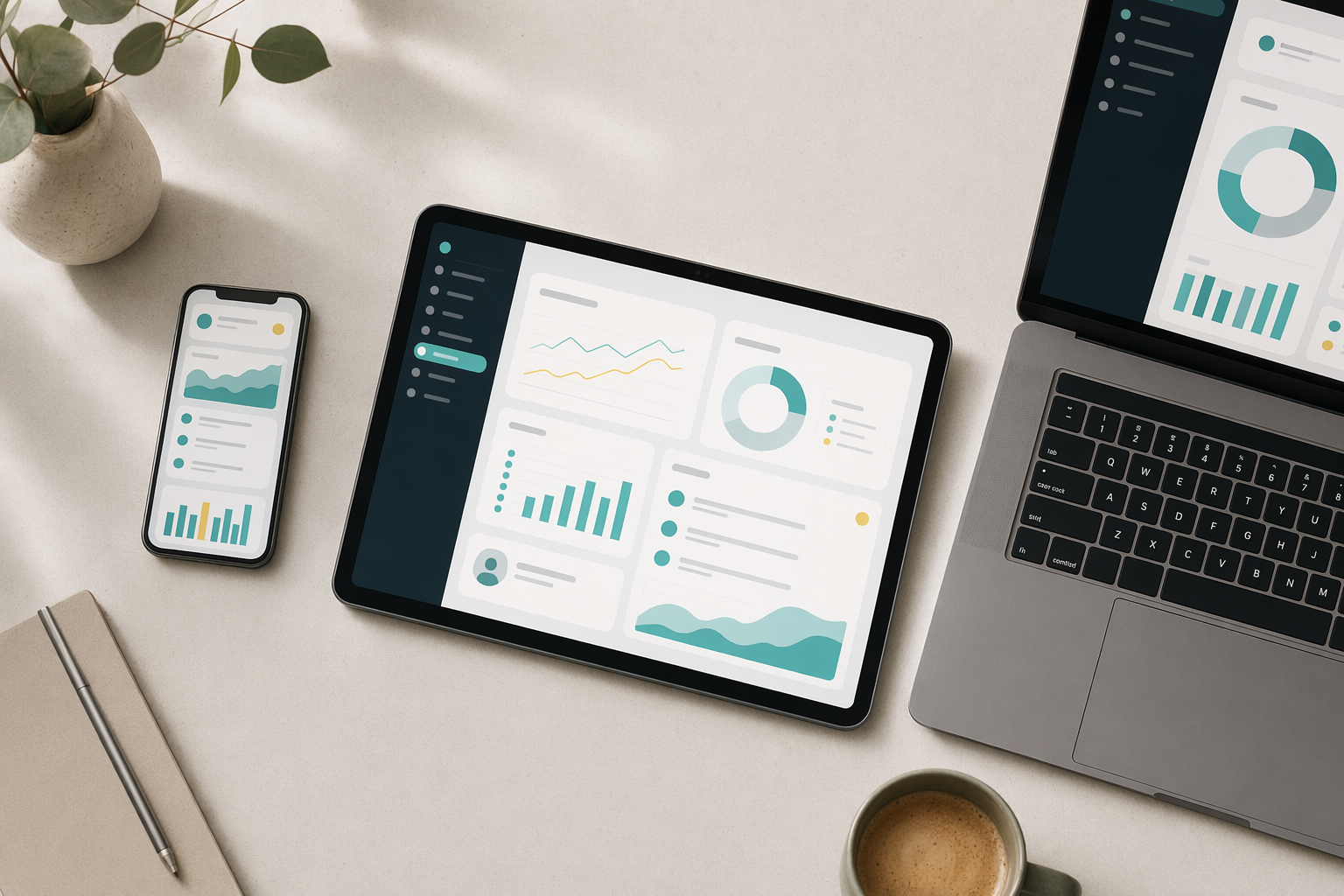
For most of the businesses I talk to, the office isn't a room anymore. It's a phone in a tradie's ute, a tablet on the reception desk, a laptop open on the kitchen table at 8pm when the kids are finally asleep. The place where work happens has scattered. Yet a surprising amount of business software still behaves like everyone is sitting at a fixed desk, waiting to log in when they get back.
That gap is the real story behind the shift to cloud-native, mobile-first platforms. It gets talked about as a technology trend, and it is one. But underneath it is something simpler: people expect their tools to be wherever they are, right when they need them. If your booking system only really works when you're in front of a monitor, you've quietly built a bottleneck into your own day.
We've been here before with our own pockets
Think about how banking changed. Not that long ago, moving money meant a branch, a queue, and business hours that never quite matched yours. Then it moved to a website you could use from home. Now most people can't remember the last time they walked into a bank, because the whole thing lives in an app and works while you're standing in a checkout line. Nobody framed that as a revolution at the time. It just became normal, and going back would feel absurd.
Business software is walking the same path, only a step or two behind. Cloud-native doesn't just mean "we put it online." It means the software was built from the start to run from anywhere, sync instantly, and expect that the person using it might be on a train, a job site, or a couch. That's a different design decision than taking old desktop software and bolting a login page onto it.

Mobile flexibility isn't a feature, it's the point
Here's what I see catching businesses out. They sign up for a platform that looks great on a big screen during the demo, then discover the mobile version is a stripped-back afterthought. You can view a booking but not change it. You can see an enquiry but can't reply until you're back at the desk. So the tool that was meant to save time becomes something you have to remember to do later.
Real mobile flexibility means the person on the floor can update pricing, confirm a booking, reply to a lead, or check the roster in the two minutes they have between jobs. It means a cafe owner can push out a promotion from their phone during a quiet patch, not wait until closing. When the whole business runs from one login that actually works on the small screen, the admin stops piling up. That's the difference between software that fits your day and software you have to make time for.
This is also where the industry is heading whether individual vendors like it or not. Younger business owners have never known a world where their tools didn't travel with them. They won't tolerate a platform that pretends the desk is still the centre of everything.
Cloud-native brings a quieter promise: it keeps up
There's a second reason this shift matters, and it's less obvious than the phone-in-your-pocket part. Software built properly for the cloud can improve without you doing anything. No updates to install, no version everyone's stuck on because upgrading is a hassle. When a new AI tool for qualifying leads or sorting a roster is ready, it just appears. You didn't have to schedule downtime or call anyone.
For a small or medium business, that's genuinely valuable, because you don't have an IT department to manage any of this. You've got a business to run. The platform should carry the burden of staying current so you don't have to think about it.
Where this leaves Australian businesses
The part I'd add, speaking from where we sit at Hixel, is that "cloud-native and mobile" shouldn't cost you control over your own information. As more of your business lives in an app, where that data sits and who can reach it stops being a technical footnote and becomes a real question. Australian businesses have particular obligations around privacy and compliance, and a global platform designed somewhere else won't always treat those as a priority. Local matters here, not as a flag-waving thing, but because local support and local data handling mean fewer nasty surprises.
My honest take is this. The move to cloud-native, mobile platforms isn't the future you need to prepare for. It's already the baseline your customers and your staff expect. The businesses that feel calmest right now aren't the ones with the most tools. They're the ones who can run the whole thing, website, bookings, marketing, team, from one place, on whatever screen is closest.
The desk stayed still for a long time. Work didn't. It's fair to ask your software to catch up.
