


Every few months a new tool promises to do your marketing for you. Write the posts, qualify the leads, follow up with customers, all while you get on with the actual work. The pitch is appealing because the problem is real. Most small service businesses in Australia are stretched thin, and the admin never stops.
But here is what I keep noticing when I talk to business owners. They already have the tools. They have a scheduler for social, an email platform, a booking system, a spreadsheet for leads, and now an AI writing assistant bolted onto one corner of it. Each one works fine on its own. Together they create a different kind of tax: the cost of moving information between them, remembering which one does what, and stitching it all into something that feels like a business rather than a pile of subscriptions.
So I want to make an argument that sounds a little contrary at first. The demand for AI marketing automation is real and worth taking seriously. But AI on its own does not save you time. AI that lives where your business already lives does.
Automation is only as good as what it can see
Think about what you actually want from marketing automation. You want a follow-up to go out to someone who enquired but did not book. You want repeat customers to hear about a new service. You want the quiet weeks filled and the busy weeks managed. None of that is a writing problem. It is a knowing problem.
An AI tool that only sees your social drafts can write you a caption. Useful, sure. But it cannot tell you that Thursday afternoons are dead, that half your enquiries last month went cold, or that the customers who booked twice came through one particular channel. That information is sitting in your bookings, your customer records, and your operations. If the AI cannot see it, it is guessing.
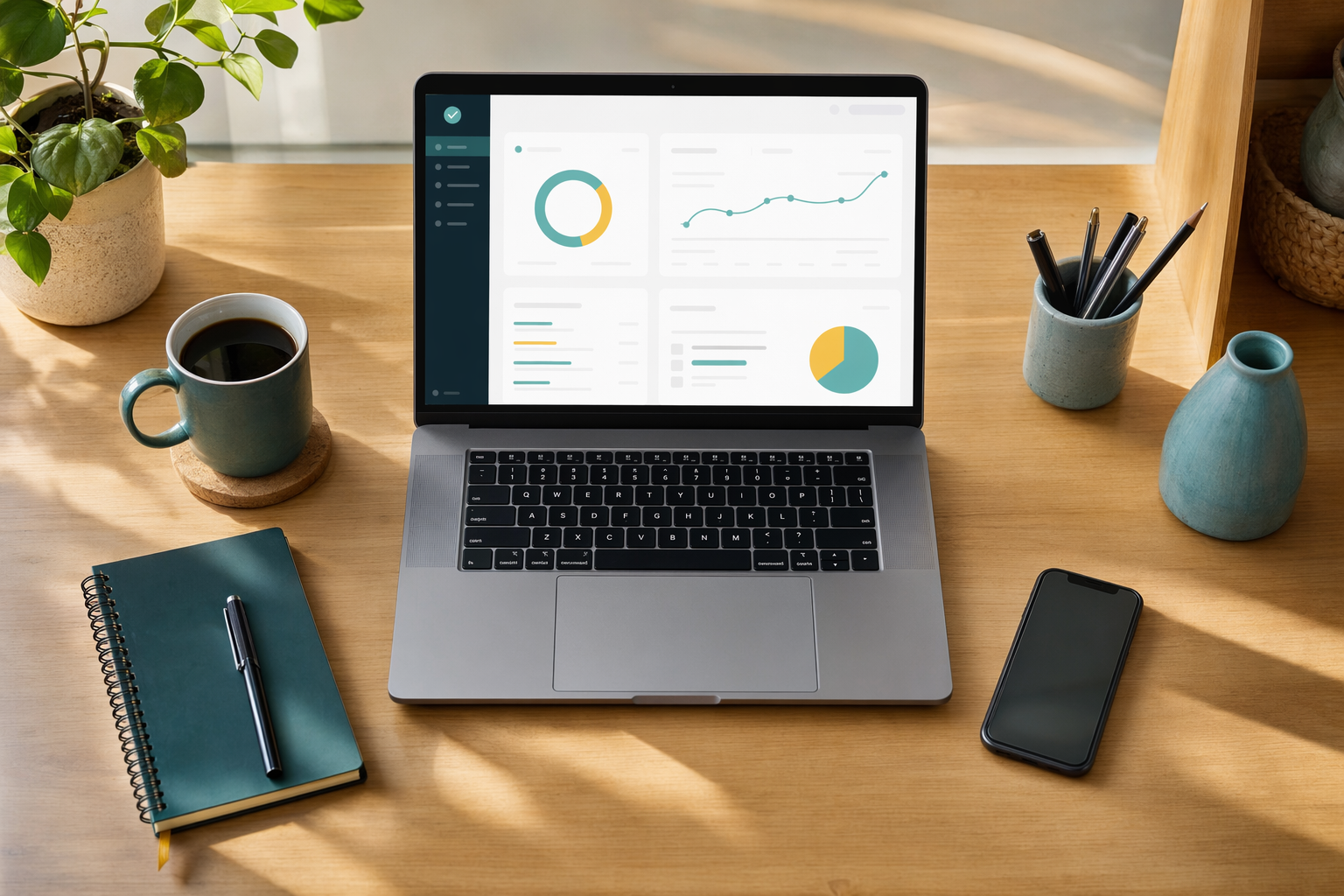
This is the part the market is still working out. The trend reports talk about AI-driven marketing and customer experience as if they are features you switch on. In practice they are downstream of your data. A clever assistant connected to nothing is a very fast intern with no idea what your business does. The value shows up when the same system that handles your bookings also knows who to follow up with, and the same system that runs your website can publish the campaign without you copying anything across.
We have been here before with software
There is a useful pattern in how business software has gone. First we had a separate program for everything, and the work was in moving files between them. Then suites turned up and promised one place for it all, but they were heavy and built for big companies with IT departments. Small businesses got left with the file-shuffling.
AI is now repeating the first part of that cycle. We are in the stage where there is a separate clever tool for every task. A writer here, a chatbot there, a lead scorer somewhere else. It feels modern, but the underlying problem is the old one. You are the integration layer. You are the person carrying information from one tool to the next, which is exactly the work you were trying to get rid of.
The shift that matters is not more AI. It is AI that sits inside one system, so the automation has the full picture and you are not the glue holding it together.
What this should look like for a service business
Let me get specific, because the abstract version of this is easy to nod along to and hard to act on.

If you run a clinic, a trades business, a studio, or a salon, here is the test I would apply to any AI marketing promise. Can it act on a real enquiry without me retyping it? When someone books, does the follow-up just happen, or do I have to set it up in a second app? When I change my pricing, does it update on my website and in my campaigns at once, or in five places by hand? Does it understand the rhythm of my industry, or is it the same generic assistant a software company is also selling to a law firm and a bakery?
Those questions cut through the hype quickly. They move the conversation from "does it have AI" to "does the AI actually reduce the number of things I touch in a day". That is the only measure that counts.
This is the thinking behind how we build Hixel Space. We are an Australian platform for small and medium service businesses, and we keep your website, bookings, marketing, team, and operations under one login on purpose. The AI is there to qualify leads, handle rostering, and take the marketing busywork off your plate. It works because it can see the whole business, not one slice of it. And because it is built here, the privacy, GST, and compliance side is handled the way Australian businesses need.
The point
The demand for AI marketing is not wrong. The instinct that admin is eating your week is correct. Just be careful what you are buying. A standalone AI tool can make a small task faster while quietly adding a new tab, a new password, and a new thing to keep in sync.
Real time saved comes from fewer moving parts, not cleverer ones. Judge any tool, ours included, by whether it shrinks your day or just decorates it. That is the question worth asking before you sign up to anything.
